

Blog
Blog TimerStart
Các hướng dẫn thực tế về hẹn giờ, báo thức, đếm ngược và cách sử dụng thời gian tốt hơn.
Hướng dẫn mới
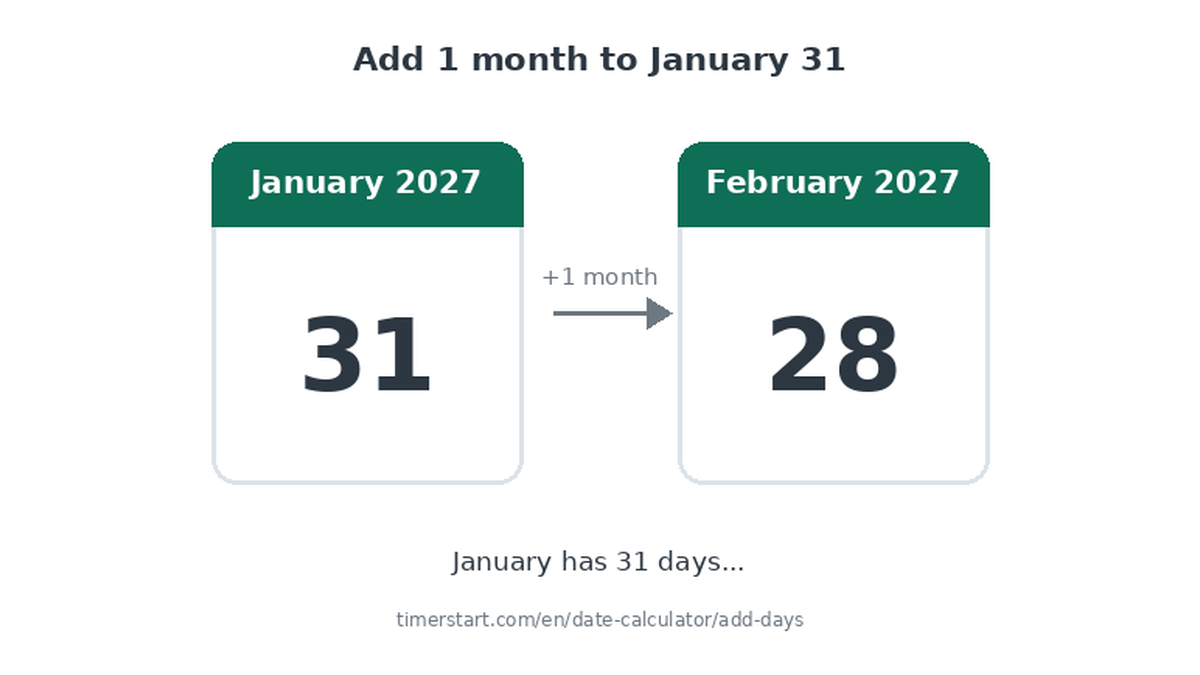 July 28, 2026 / TimerStart Editorial Team / English
How to Add Weeks, Months, or Years to a Date
Learn how to add weeks, months, or years to a date, including shorter-month and leap-year adjustments.
July 28, 2026 / TimerStart Editorial Team / English
How to Add Weeks, Months, or Years to a Date
Learn how to add weeks, months, or years to a date, including shorter-month and leap-year adjustments.
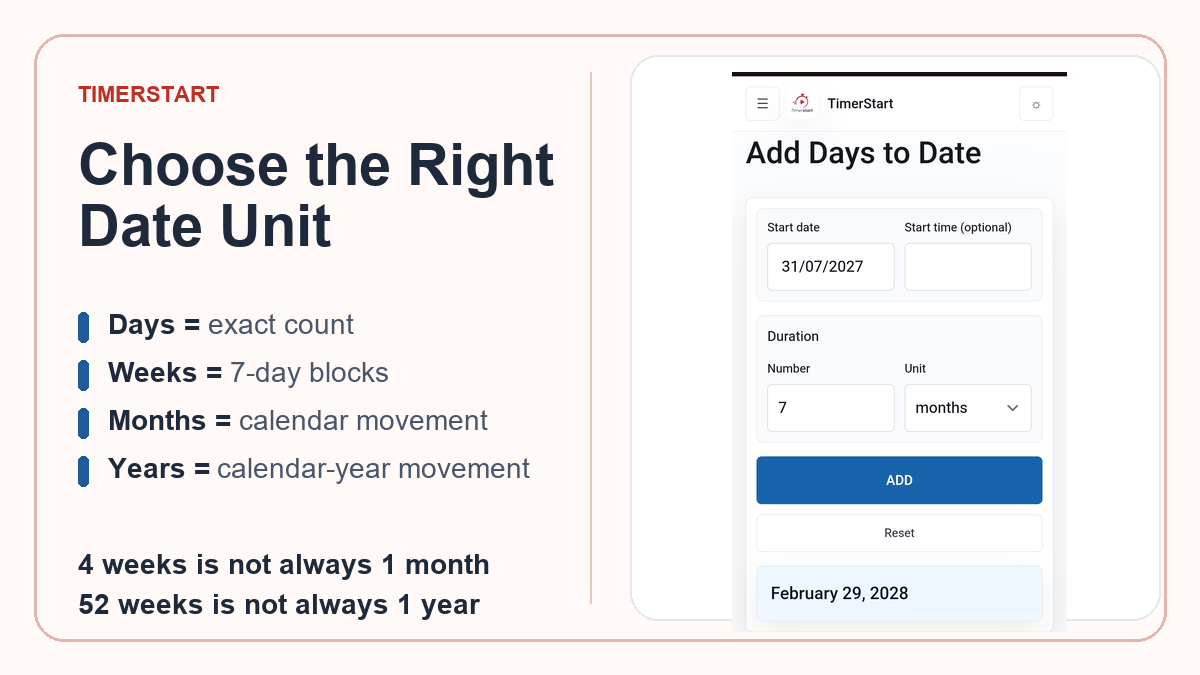 July 27, 2026 / TimerStart Editorial Team / English
Days, Weeks, Months, or Years: Which Date Calculator Unit Should You Use?
Learn when to use days, weeks, months, or years in a date calculator and why common conversions differ.
July 27, 2026 / TimerStart Editorial Team / English
Days, Weeks, Months, or Years: Which Date Calculator Unit Should You Use?
Learn when to use days, weeks, months, or years in a date calculator and why common conversions differ.
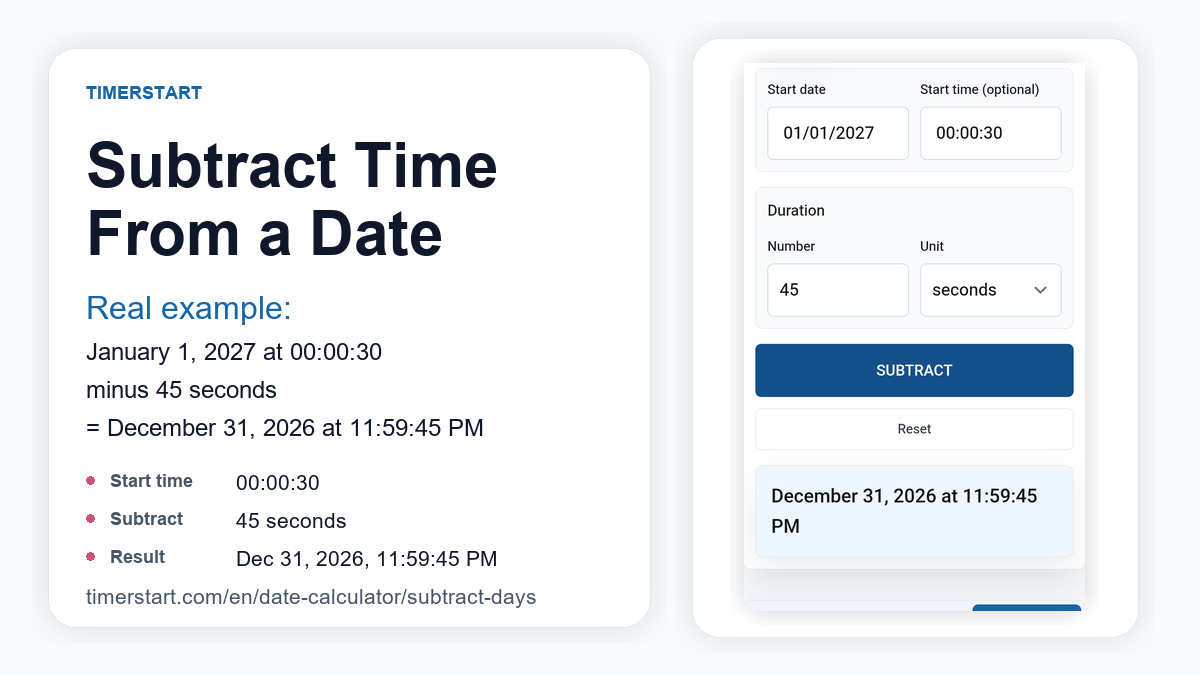 July 25, 2026 / TimerStart Editorial Team / English
How to Subtract Hours, Minutes, or Seconds From a Date and Time
Learn how to subtract hours, minutes, or seconds from a starting date and time, including midnight, month, and year rollbacks.
July 25, 2026 / TimerStart Editorial Team / English
How to Subtract Hours, Minutes, or Seconds From a Date and Time
Learn how to subtract hours, minutes, or seconds from a starting date and time, including midnight, month, and year rollbacks.
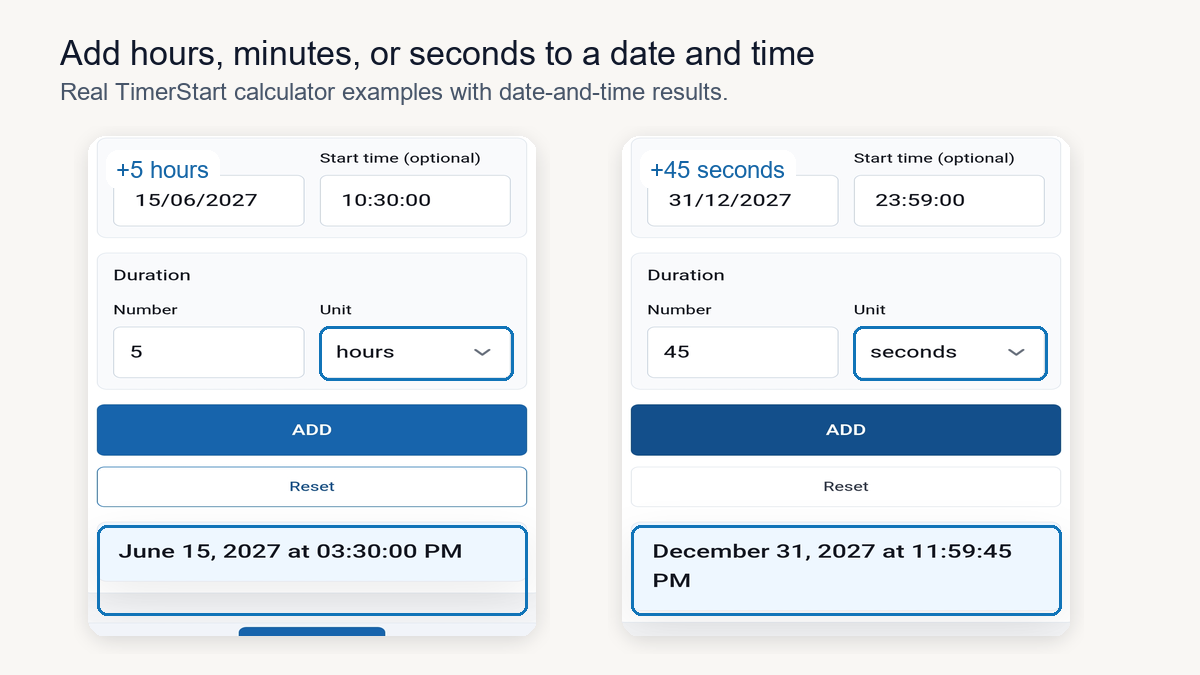 July 24, 2026 / TimerStart Editorial Team / English
How to Add Hours, Minutes, or Seconds to a Date and Time
Learn how to add hours, minutes, or seconds to a starting date and time, including midnight, month, and year rollovers.
July 24, 2026 / TimerStart Editorial Team / English
How to Add Hours, Minutes, or Seconds to a Date and Time
Learn how to add hours, minutes, or seconds to a starting date and time, including midnight, month, and year rollovers.
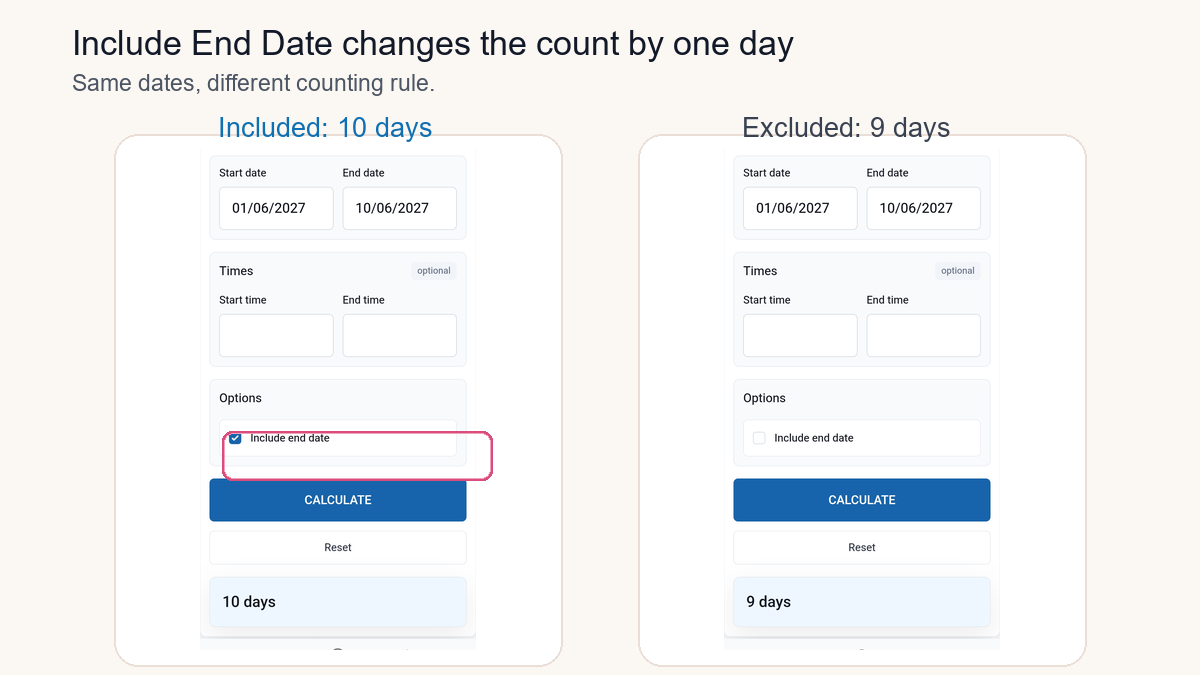 July 23, 2026 / TimerStart Editorial Team / English
Should You Include the End Date When Counting Days Between Dates?
Learn when the final date should count, why calculators can differ by one day, and how TimerStart handles inclusive date counting.
July 23, 2026 / TimerStart Editorial Team / English
Should You Include the End Date When Counting Days Between Dates?
Learn when the final date should count, why calculators can differ by one day, and how TimerStart handles inclusive date counting.
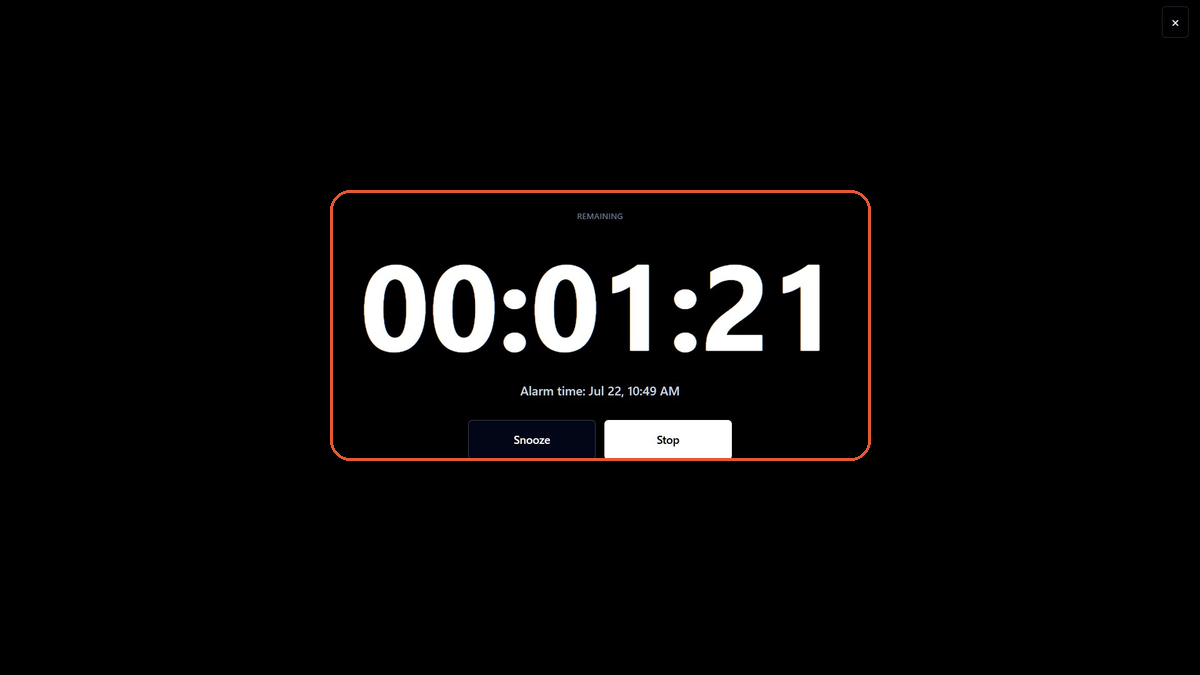 July 22, 2026 / TimerStart Editorial Team / English
Why Your Browser Alarm May Not Ring on Time
Troubleshoot browser alarms that are late, silent, missed, or affected by tabs, sleep, battery saver, sound settings, or device clocks.
July 22, 2026 / TimerStart Editorial Team / English
Why Your Browser Alarm May Not Ring on Time
Troubleshoot browser alarms that are late, silent, missed, or affected by tabs, sleep, battery saver, sound settings, or device clocks.
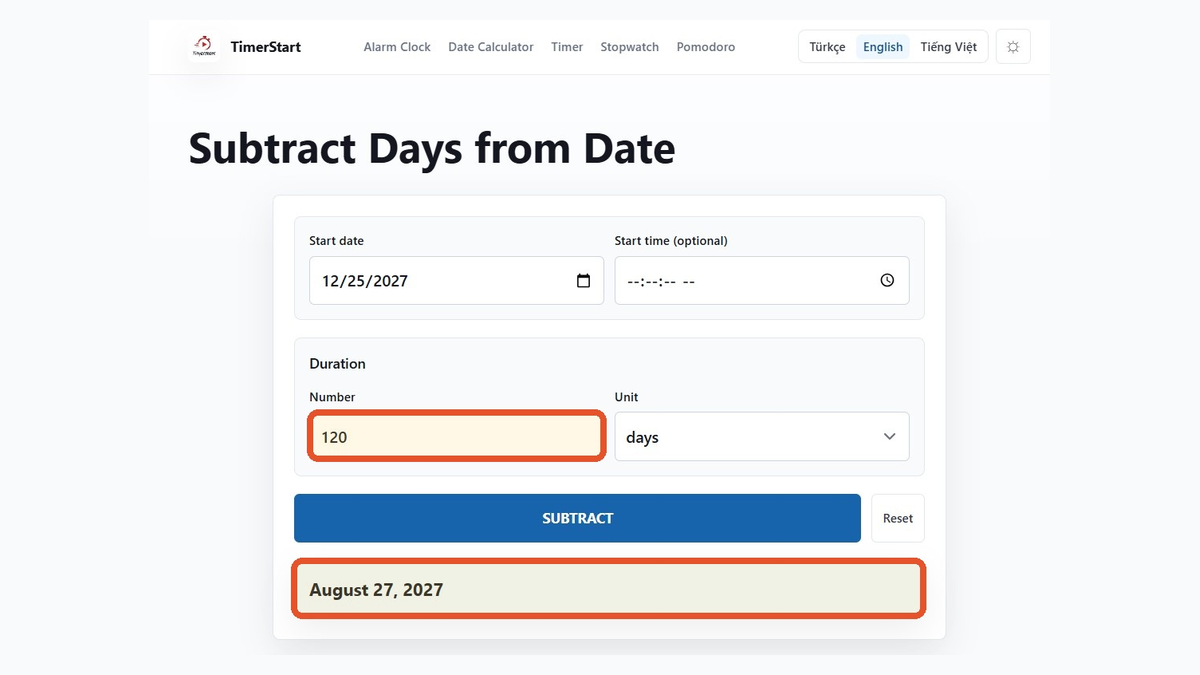 July 21, 2026 / TimerStart Editorial Team / English
What Date Was 120 or 180 Days Ago?
Calculate 120 or 180 calendar days ago, compare days with months, and avoid common lookback-date mistakes.
July 21, 2026 / TimerStart Editorial Team / English
What Date Was 120 or 180 Days Ago?
Calculate 120 or 180 calendar days ago, compare days with months, and avoid common lookback-date mistakes.
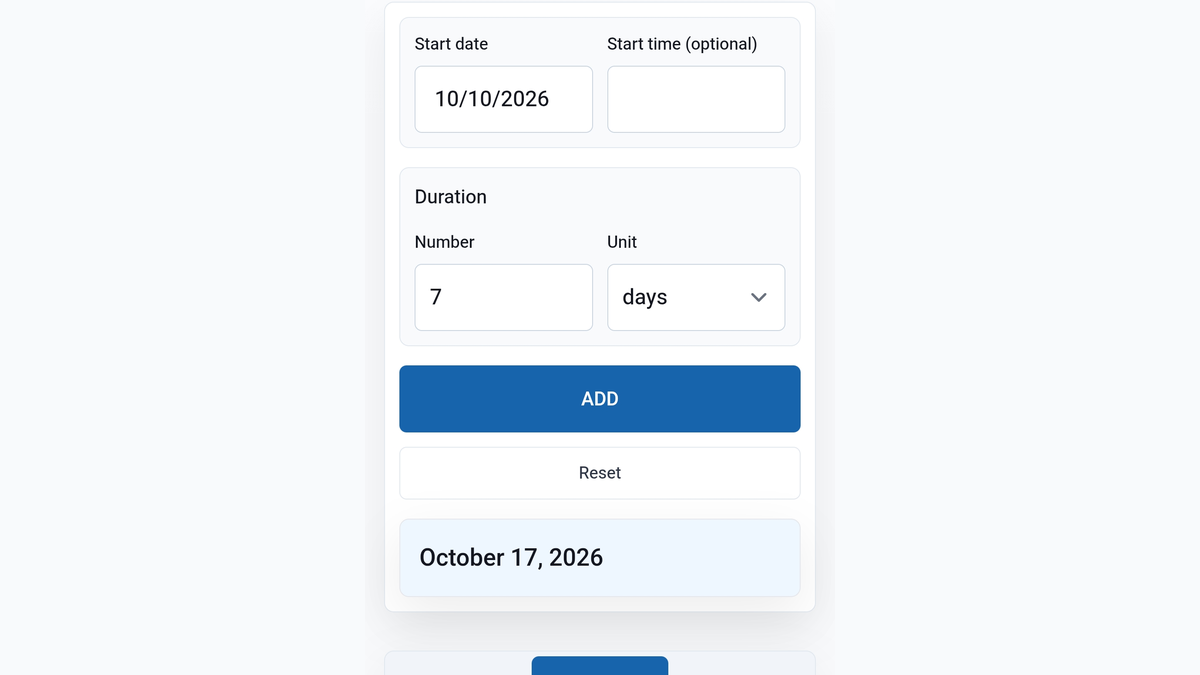 July 20, 2026 / TimerStart Editorial Team / English
How to Add Days to a Date Without Counting Manually
Add days to any date, avoid month and leap-year mistakes, and find a future calendar date quickly.
July 20, 2026 / TimerStart Editorial Team / English
How to Add Days to a Date Without Counting Manually
Add days to any date, avoid month and leap-year mistakes, and find a future calendar date quickly.
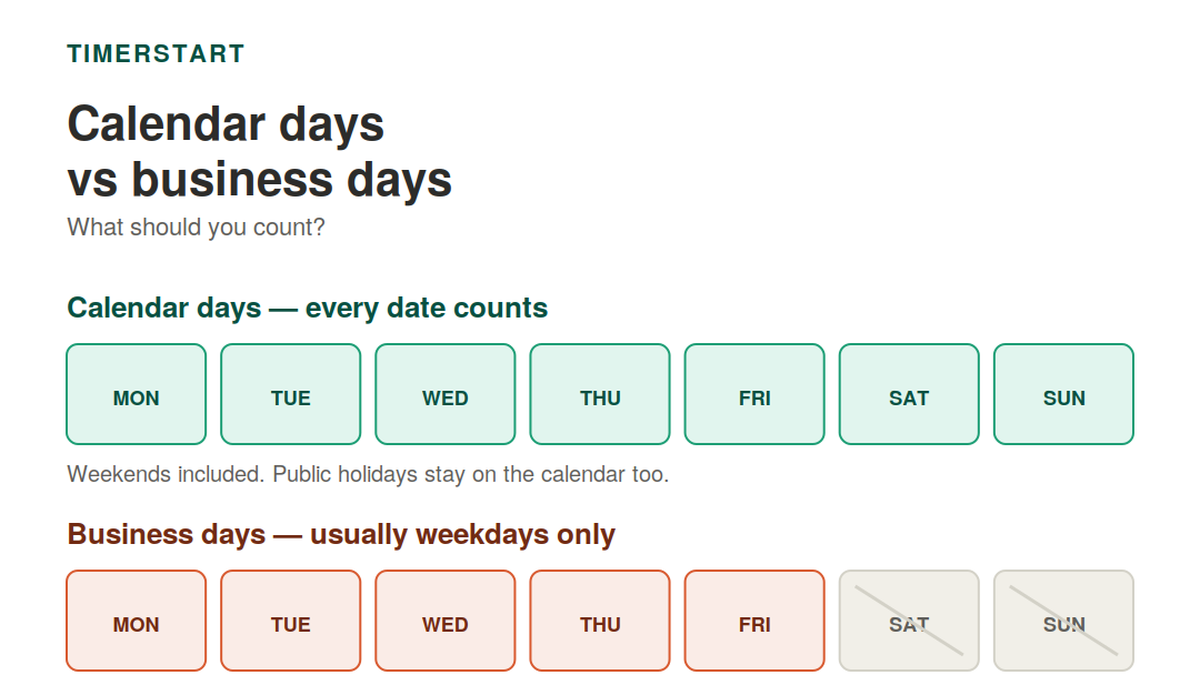 July 18, 2026 / TimerStart Editorial Team / English
Calendar Days vs Business Days: What Should You Count?
Learn when to count every calendar date, when business days may exclude weekends or holidays, and how TimerStart handles calendar-day calculations.
July 18, 2026 / TimerStart Editorial Team / English
Calendar Days vs Business Days: What Should You Count?
Learn when to count every calendar date, when business days may exclude weekends or holidays, and how TimerStart handles calendar-day calculations.
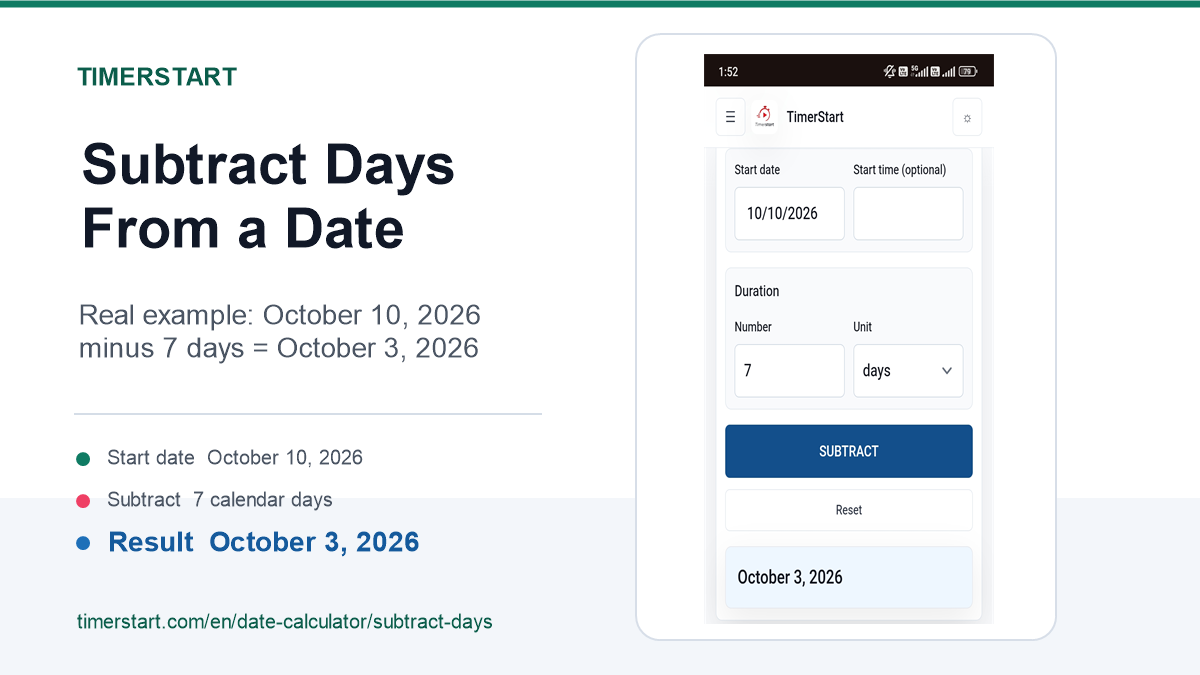 July 17, 2026 / TimerStart Editorial Team / English
How to Subtract Days From a Date Without Counting Manually
Subtract days from any date, avoid month and leap-year mistakes, and find an earlier calendar date quickly.
July 17, 2026 / TimerStart Editorial Team / English
How to Subtract Days From a Date Without Counting Manually
Subtract days from any date, avoid month and leap-year mistakes, and find an earlier calendar date quickly.
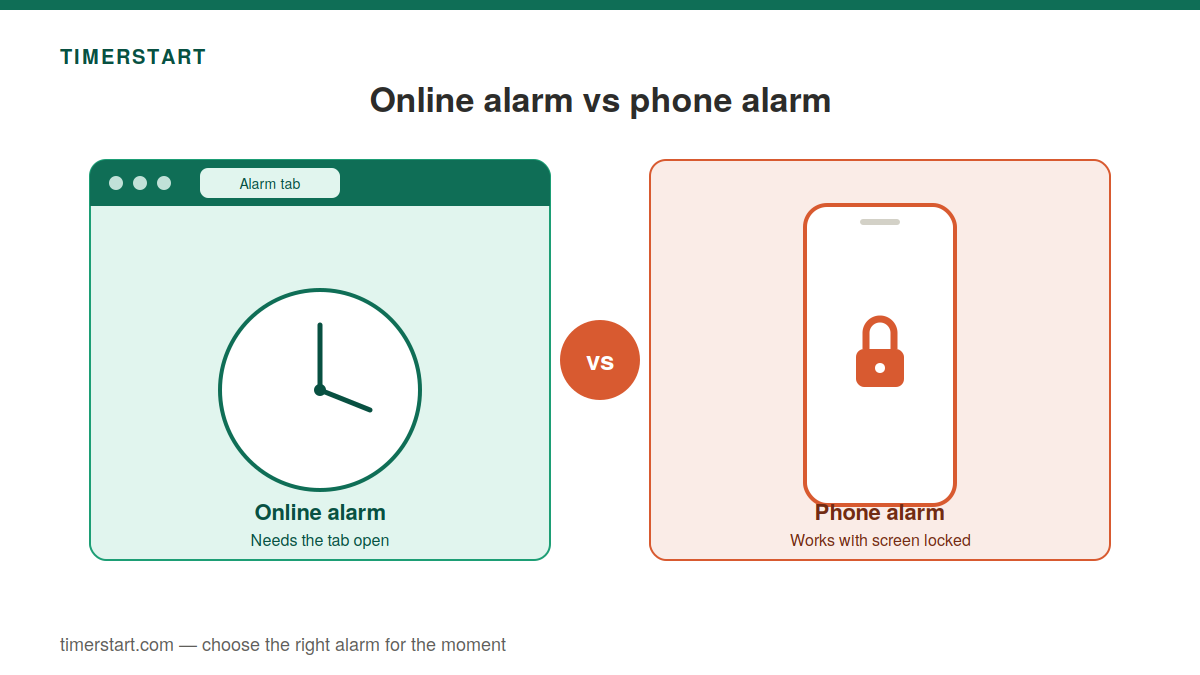 July 16, 2026 / TimerStart Editorial Team / English
Online Alarm vs Phone Alarm: What Is the Difference?
Compare online alarms and phone alarms, including tabs, sleep mode, screen lock, sound settings, and when each option makes sense.
July 16, 2026 / TimerStart Editorial Team / English
Online Alarm vs Phone Alarm: What Is the Difference?
Compare online alarms and phone alarms, including tabs, sleep mode, screen lock, sound settings, and when each option makes sense.
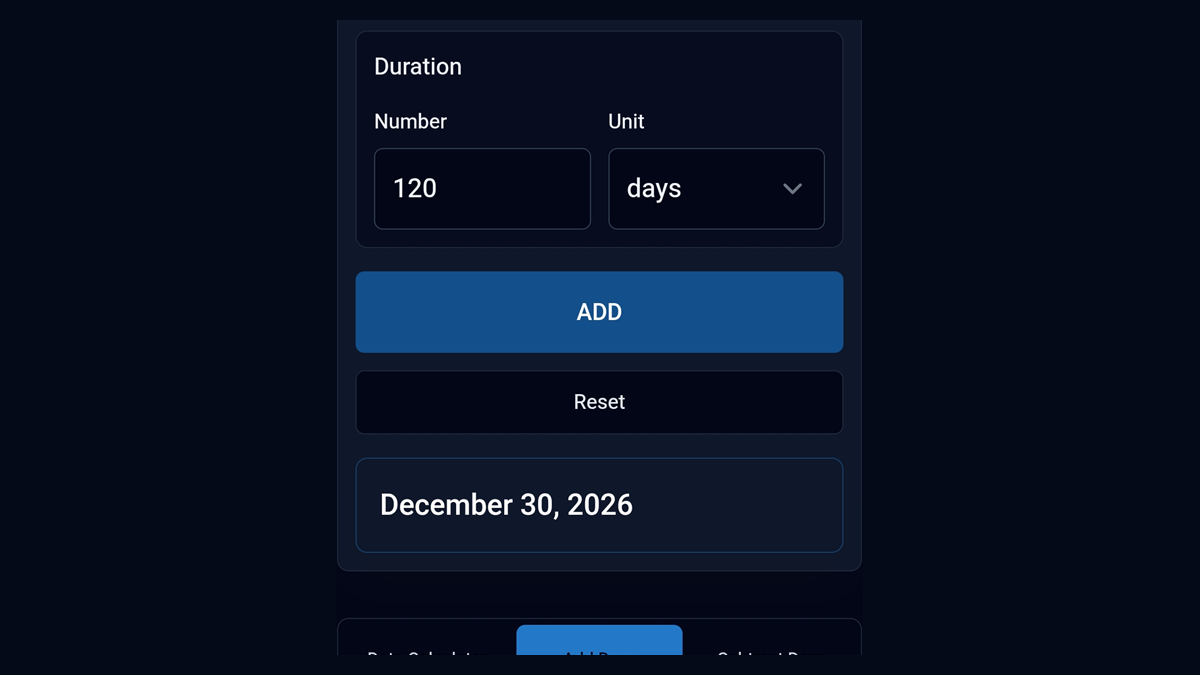 July 14, 2026 / TimerStart Editorial Team / English
What Date Is 120 or 180 Days From Today?
Calculate 120 or 180 calendar days from today, compare days with months, and avoid common future-date mistakes.
July 14, 2026 / TimerStart Editorial Team / English
What Date Is 120 or 180 Days From Today?
Calculate 120 or 180 calendar days from today, compare days with months, and avoid common future-date mistakes.
 July 08, 2026 / TimerStart Editorial Team / English
Will an Online Alarm Go Off If Your Browser Is Closed or Phone Is on DND?
Learn how browser-based online alarms work, what can stop alarm sound, and what to check before relying on an online alarm.
July 08, 2026 / TimerStart Editorial Team / English
Will an Online Alarm Go Off If Your Browser Is Closed or Phone Is on DND?
Learn how browser-based online alarms work, what can stop alarm sound, and what to check before relying on an online alarm.
 July 06, 2026 / TimerStart Editorial Team / English
How to Use a 30 Minute Timer for Study, Work, and Breaks
Learn simple ways to use a 30 minute timer for study sessions, work blocks, classroom activities, meetings, and breaks.
July 06, 2026 / TimerStart Editorial Team / English
How to Use a 30 Minute Timer for Study, Work, and Breaks
Learn simple ways to use a 30 minute timer for study sessions, work blocks, classroom activities, meetings, and breaks.
 July 03, 2026 / TimerStart Editorial Team / English
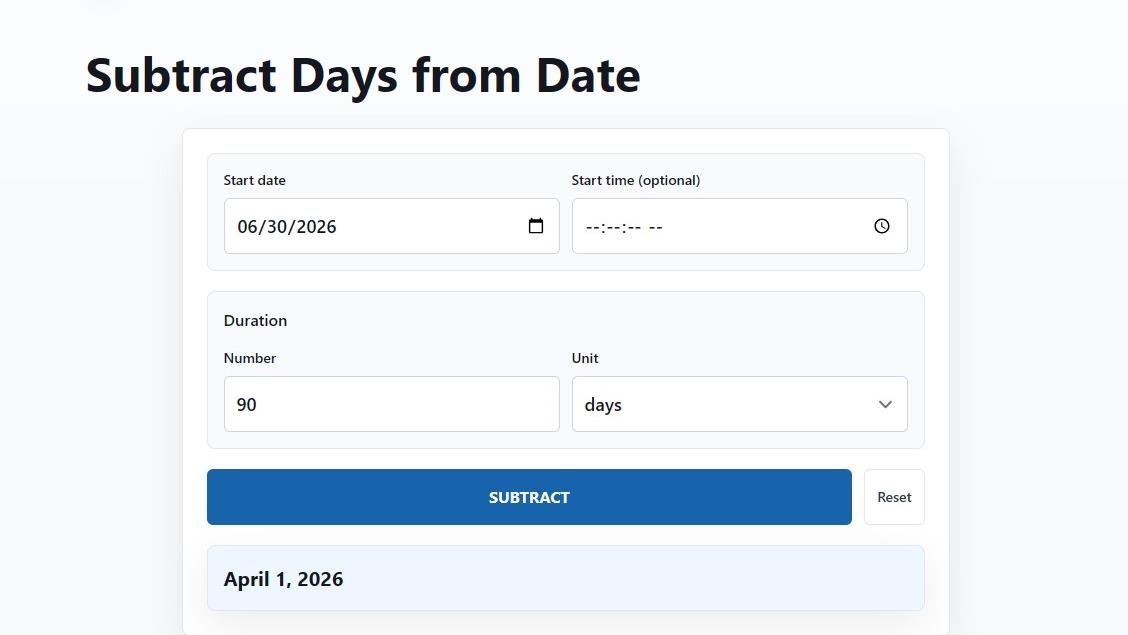
What Date Was 30, 60, or 90 Days Ago?
Learn how to calculate 30, 60, or 90 days ago, avoid common past-date mistakes, and use TimerStart's Subtract Days tool for quick results.
July 03, 2026 / TimerStart Editorial Team / English
What Date Was 30, 60, or 90 Days Ago?
Learn how to calculate 30, 60, or 90 days ago, avoid common past-date mistakes, and use TimerStart's Subtract Days tool for quick results.
 June 30, 2026 / TimerStart Editorial Team / English
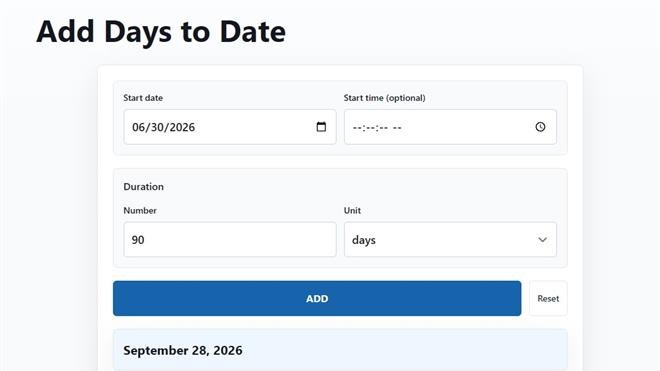
What Date Is 30, 60, or 90 Days From Today?
Learn how to calculate 30, 60, or 90 days from today, avoid common future-date mistakes, and use TimerStart's Add Days tool for quick results.
June 30, 2026 / TimerStart Editorial Team / English
What Date Is 30, 60, or 90 Days From Today?
Learn how to calculate 30, 60, or 90 days from today, avoid common future-date mistakes, and use TimerStart's Add Days tool for quick results.
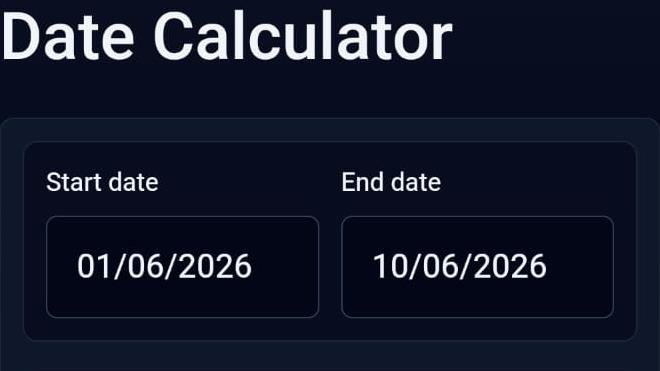 June 26, 2026 / TimerStart Editorial Team / English
How to Calculate Days Between Two Dates
Learn how to calculate days between two dates, when to include the end date, and which common date-counting mistakes to avoid.
June 26, 2026 / TimerStart Editorial Team / English
How to Calculate Days Between Two Dates
Learn how to calculate days between two dates, when to include the end date, and which common date-counting mistakes to avoid.
Blog TimerStart dành cho những ai muốn quản lý thời gian tốt hơn nhưng không muốn biến năng suất thành một hệ thống phức tạp.
Tại đây, bạn sẽ tìm thấy các hướng dẫn thực tế về bộ đếm thời gian trực tuyến, đồng hồ báo thức, đồng hồ đếm ngược, phiên tập trung, thói quen học tập, khối thời gian làm việc và cách lập kế hoạch hằng ngày. Mục tiêu rất đơn giản: giúp bạn bắt đầu đúng lúc, tập trung tốt hơn, nghỉ ngơi hợp lý và hoàn thành việc mình đã định làm.
Không phải ai cũng cần một ứng dụng năng suất phức tạp. Điều nhiều người thật sự cần là một điểm bắt đầu rõ ràng. Một phiên học 25 phút. Một bộ đếm 10 phút để dọn dẹp. Một đồng hồ đếm ngược trước cuộc họp. Một lời nhắc nhỏ để ngừng lướt điện thoại và quay lại việc quan trọng. Những thói quen nhỏ với bộ đếm thời gian có thể tạo ra khác biệt lớn trong ngày.
Blog TimerStart được viết cho học sinh, sinh viên, người làm việc từ xa, người sáng tạo nội dung, cha mẹ bận rộn và bất kỳ ai thường bị mất tập trung. Nội dung cần đơn giản, dễ hiểu và dễ áp dụng. Không có lý thuyết nặng nề. Không có thiết lập rối rắm. Chỉ là những cách thực tế để sử dụng thời gian có chủ đích hơn.
Bạn sẽ tìm thấy các bài viết về cách bộ đếm thời gian trực tuyến hoạt động, cách đồng hồ đếm ngược hỗ trợ sự tập trung, cách báo thức giúp duy trì thói quen và cách các phương pháp như Pomodoro hoặc time blocking giúp một ngày trở nên dễ kiểm soát hơn.
Hãy bắt đầu thật nhỏ. Chọn một việc, đặt thời gian và dành toàn bộ sự chú ý cho việc đó. Đôi khi, một phiên tập trung ngắn còn hiệu quả hơn cả một giờ loay hoay không biết nên bắt đầu từ đâu.